How to Grow Turkey Tail Mushrooms
How to grow turkey tail mushrooms (Trametes versicolor) on sawdust blocks, day by day: substrate, cutting the bag, conditions, harvest and drying.
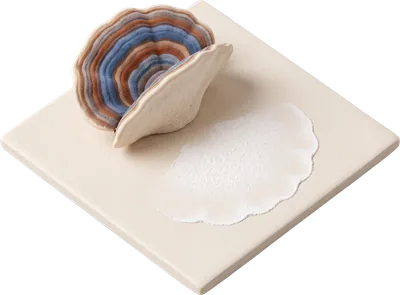
Turkey tail is Trametes versicolor (family Polyporaceae). It is a polypore, not a gilled mushroom: thin, flexible, leathery shelves with banded tops and a pale underside of tiny pores. The brackets keep about 14 days fresh and are often dried after picking. Indoors it grows on sterilized hardwood sawdust in filter bags and fruits as shelves from slits in the side of the bag. This page follows it on a farm's clock, from the culture to the second harvest. It covers blocks in bags; logs take 5 to 12 months to fruit but keep fruiting for years, and this page doesn't cover them.
Turkey tail at a glance
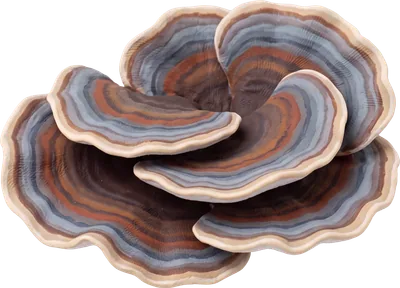
Fruiting
- Temperature
- 64 to 72 °F (18 to 22 °C)
- Humidity
- 80 to 95% relative humidity
- Fresh air
- CO2 under 1,000 ppm
- Light
- 12 hours a day
Incubation
- Temperature
- 66 to 79 °F (19 to 26 °C)
- Spawn rate
- 5 to 10% of the wet substrate's weight
Harvests
- Flushes worth picking
- 2 to 3
Practice
- Substrate
- Hardwood sawdust or pellets with little or no wheat bran (under 10%), at about 60 to 65% water, sterilized in filter bags
- Opening the bag
- Squeeze the air out, fold the top down behind the block, and cut a few long slits in the front and sides. The shelves grow out of the slits.
- Harvest when
- the white growing edge starts to thin, before it recedes and before the pore surface underneath discolors
- To start fruiting
- wait until the block is dense and white, then cut slits in the bag and raise the humidity, with fresh air reaching the cuts
Fruiting temperature, humidity, fresh air, light and incubation temperature are the cultivation team's own. The rest come from the published sources listed under Sources.
How long turkey tail mushrooms take to grow
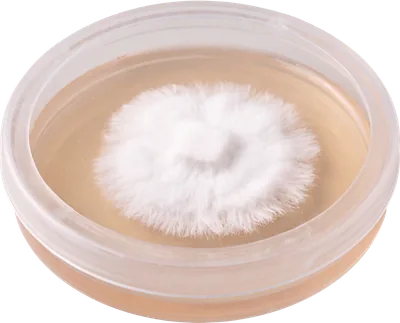
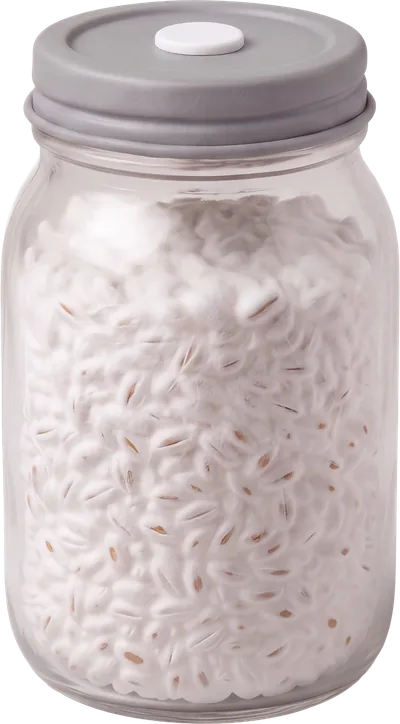
A turkey tail block gives its first harvest on about day 85 after it is inoculated and its second on about day 130. Before that, the grain spawn takes about 21 days, and before the grain a new culture takes about 14 days, on agar or in liquid culture: about 120 days from a new culture to the first harvest. A farm with a culture on hand starts at the grain spawn, and one that buys its grain spawn starts at Day 0. Published guides disagree on how long each stage takes; these are the days MycoQR's cultivation team set.
about 35 days before
Agar or liquid culture
inoculated
then about 14 daysabout 21 days before
Grain spawn inoculated
from the culture
then about 21 daysDay 0
Block inoculated
with the colonized grain
then about 20 daysabout Day 20
Colonized
open the bag to fruit
then about 65 daysabout Day 85
First harvest
then about 45 daysabout Day 130
Second harvest
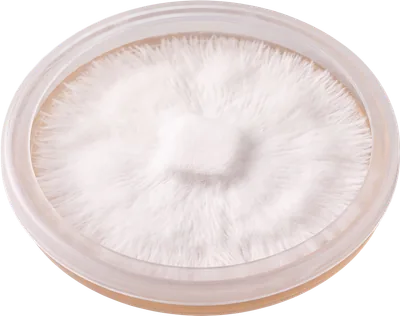
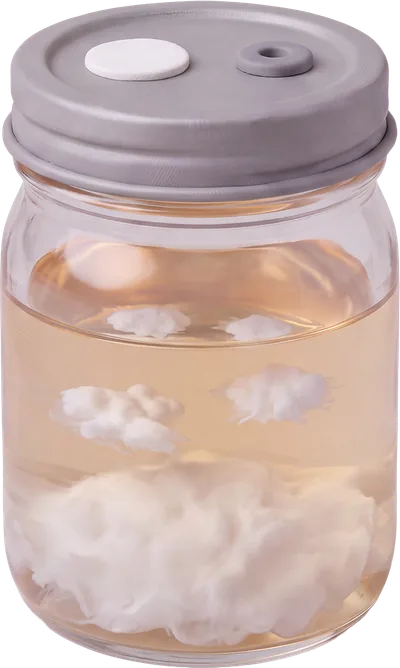
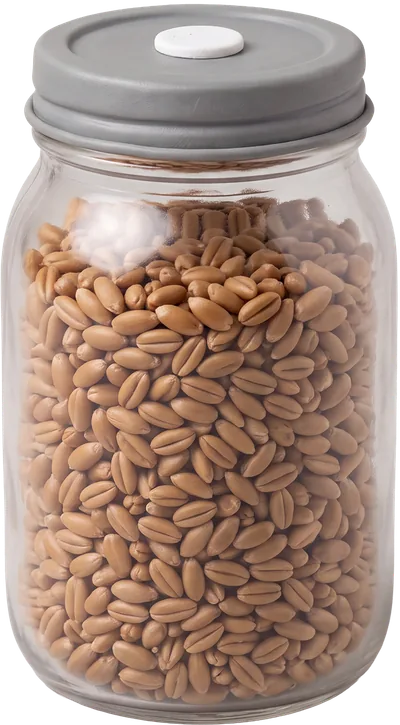
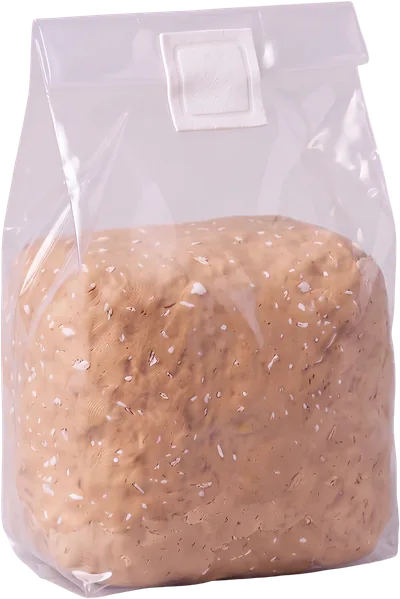
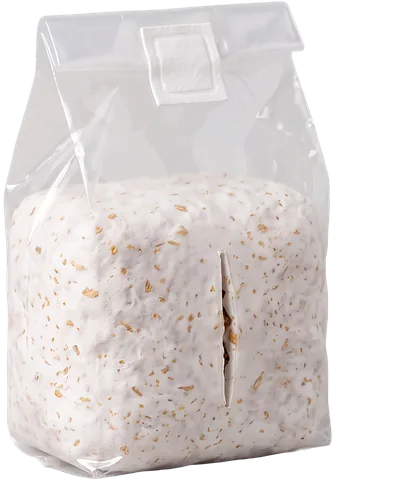
A colonized block can wait up to about 30 days at room temperature, or about 90 in cold storage, before you open it.
The strip starts from a culture. From a spore print, spores germinate on agar first and one strain is picked out before the culture step. Each spore start is new genetics, while a tissue culture keeps its parent's.
A farm's own blocks run faster or slower with its strain and its rooms. In MycoQR, a farm's turkey tail strain starts on the calendar's days, and the dashboard lists any block past its window. Once the strain has enough stage times of its own, those take over: mushroom grow stage tracking.
Every mushroom's days, side by side: which mushrooms to grow.
Turkey tail substrate and spawn
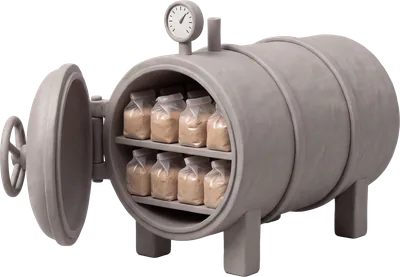
Substrate: Hardwood sawdust or pellets with little or no wheat bran (under 10%), at about 60 to 65% water, sterilized in filter bags.
Spawn rate: 5 to 10% of the wet substrate's weight.
How much wheat bran is the open question. Most sources use little or no wheat bran (GroCycle, Nguyen et al. 2021); one study got more from a richer mix (Jahedi et al. 2026), so try it on a few blocks first.
Sawdust blocks are sterilized, not pasteurized, and bran feeds molds as well as the mushroom: the more bran in the mix, the higher the risk of contamination. Making and sterilizing blocks is in Mycology 103: substrate science and spawn production.
Colonizing
Keep blocks at 66 to 79 °F (19 to 26 °C) while they colonize.
On the calendar above, a block colonizes in about 20 days; most of turkey tail's time comes after that, in the fruiting room.
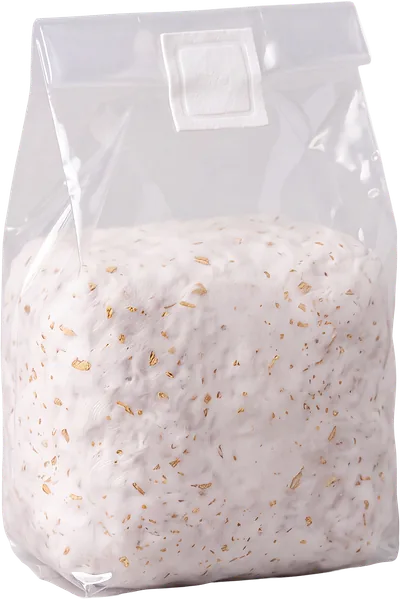
Fruiting turkey tail mushrooms: growing conditions
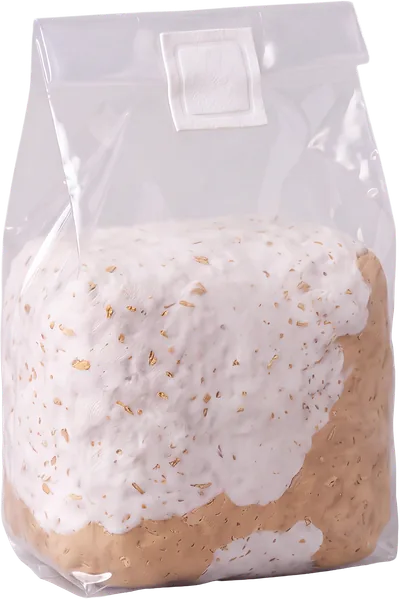
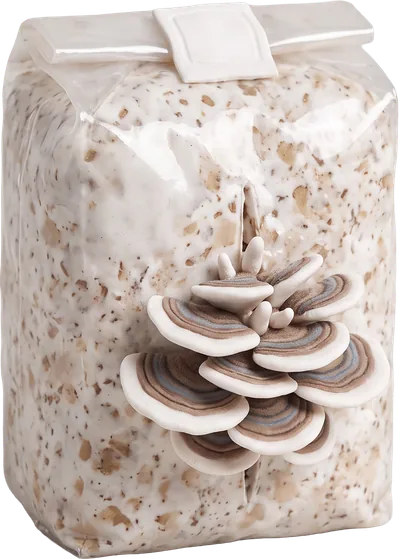
Opening the grow bag: Squeeze the air out, fold the top down behind the block, and cut a few long slits in the front and sides. The shelves grow out of the slits.
To start fruiting, wait until the block is dense and white, then cut slits in the bag and raise the humidity, with fresh air reaching the cuts.
GroCycle notes that some strains can fruit as rosettes from the top of the bag, but finds that most fruit best as shelves from slits in the side.
| Fruiting | Turkey tail |
|---|---|
| Temperature | 64 to 72 °F (18 to 22 °C) |
| Humidity | 80 to 95% relative humidity |
| Fresh air | CO2 under 1,000 ppm |
| Light | 12 hours a day |
GroCycle keeps the air wetter while the first shelves form, 95 to 100% for the first three weeks, then 85 to 90%.
How warm. Kit sellers fruit it at 60 to 75 °F (16 to 24 °C), while the two bag studies below set their rooms warmer, at 73 to 77 °F (23 to 25 °C) (Midwest Grow Kits, Zombie Mushrooms, Nguyen et al. 2021, Jahedi et al. 2026).
Fresh air and light. No source below gives a CO2 figure for turkey tail, and they split on light: Zombie Mushrooms' troubleshooting table gives 12 hours a day, while Trimleaf says it "needs no photoperiod signal to fruit" (Zombie Mushrooms, Trimleaf).
On the calendar above, the first harvest comes about 65 days after the block moves to fruiting. The first shelves can take weeks to show, and they go on growing for weeks after that.
Each condition is explained in Mycology 104: environmental control and fruiting, and fruiting chamber designs shows ways to hold them.
When to harvest turkey tail
Harvest when the white growing edge starts to thin, before it recedes and before the pore surface underneath discolors.
Grab the shelves, twist, and pull them off the block. Mycologic waits until they are at least 2 in (5 cm) wide.
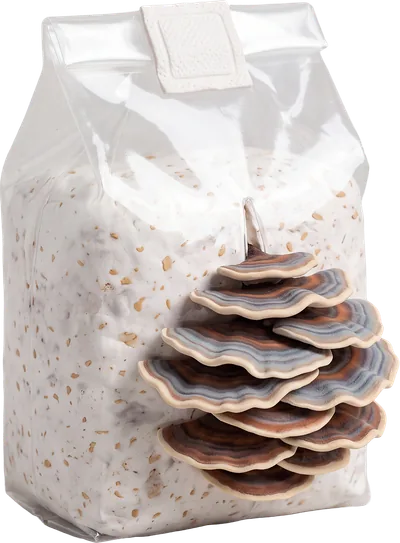
Ready to pick
- The pale growing edge: pick as it starts to thin.
- The shelves grow from a slit in the side of the bag.
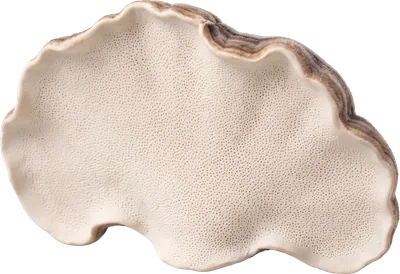
After the harvest
On the calendar above, the next flush is ready about 45 days after a harvest. A block gives 2 to 3 flushes worth picking.
A fresh harvest keeps about 14 days, refrigerated in a paper bag. Turkey tail brackets are often dried: a dehydrator near 115 °F (46 °C) for about a day, until crisp, then airtight. GroCycle says to dry them soon after picking, before mold can start, and NCAT notes that mushrooms dried until crisp keep for many months in airtight containers.
Storing cultures and spawn
On the cultivation team's answers, cold storage extends the life of turkey tail plates, liquid culture, grain spawn and colonized blocks, and does nothing for spores. The days below are the team's. Storing cultures is in Mycology 102: sterile technique and culture work.
| Finished | Room temperature | Cold storage |
|---|---|---|
| Agar plates | about 45 days | about 120 days |
| Liquid culture | about 90 days | about 180 days |
| Grain spawn | about 45 days | about 80 days |
| Colonized blocks | about 30 days | about 90 days |
What goes wrong
No shelves. The air is too dry, or the bag is still closed. Give it time, too: Zombie Mushrooms notes that nothing may show for the first 2 to 3 weeks, while the mycelium grows inside the block.
Curled, dried shelves. Trimleaf warns that if humidity stays below 80% for long, "the leathery brackets will curl and dry before reaching full development" (Trimleaf).
Long, finger-like growth. Too little fresh air. Too much dries the shelves instead, so if they dry after you raise the fresh air, raise the humidity with it.
Irregular shelves or mold. Too wet: water condensing on the shelves in a closed chamber or tent. A richer mix with more bran raises the risk of contamination too.
A shared room. GroCycle finds that turkey tail fruits best in a chamber without other mushrooms.
Common Fruiting Problems shows each of these, and the contamination guide covers molds and bacteria.
Questions
Can you grow turkey tail on sawdust instead of logs?
Yes. Indoors it grows on sterilized hardwood sawdust in filter bags, the method on this page. Field & Forest gives logs 5 to 12 months to fruit with sawdust spawn, and GroCycle says a log then fruits for several years.
How long do turkey tail mushrooms take to grow?
It takes about 120 days from a new culture to the first harvest, or about 106 days from the grain spawn, on the days MycoQR's cultivation team set. Counted from the day the block is inoculated, the first harvest comes on about day 85.
How long can a colonized turkey tail block wait?
Up to about 30 days at room temperature, or about 90 days in cold storage, before you open it, on the team's days.
How many flushes does a turkey tail block give?
2 to 3 flushes worth picking, the second about 45 days after the first.
How do you dry turkey tail?
Soon after picking, in a dehydrator near 115 °F (46 °C) for about a day, until crisp; then store it airtight.
Is turkey tail easy to grow?
Intermediate strain, long growing.Sources
Read in November 2026. The days in the grow calendar and the storage table, and any card fact marked as the team's, are MycoQR's cultivation team's.
- NCAT: Mushroom Cultivation
- Nguyen et al. 2021, substrates and wheat bran for turkey tail in bags: Journal of Applied Biology & Biotechnology
- Jahedi et al. 2026, turkey tail on wood and farm wastes with wheat bran: Asian Journal of Mycology
- Field & Forest, logs: How to grow turkey tail mushrooms on logs
- Mycologic: Growing on blocks
- Midwest Grow Kits, kit: Turkey tail mushroom grow kit
- Trimleaf: Turkey tail and cordyceps specialty kits
- GroCycle: How to grow turkey tail mushrooms: the ultimate guide
- GroCycle, profile: Turkey tail mushrooms
- Zombie Mushrooms: Turkey tail mushroom grow kits
Related guides
How to Grow Shiitake Mushrooms
How to grow shiitake mushrooms on sawdust blocks, day by day: the substrate, browning, whether to chill or soak, growing conditions and when to harvest.
Mycology 103: Substrate Science & Spawn Production
How to make grain spawn and prepare bulk substrate: choosing and hydrating grain, sterilization, substrate recipes and spawning to bulk.
Common Fruiting Problems and How to Fix Them
Diagnose and fix the most common fruiting problems: no pins, aborting pins, long stems, fuzzy feet, overlay, cracked caps and bacterial blotch.