How to Grow Maitake (Hen of the Woods) Mushrooms
How to grow maitake, hen of the woods (Grifola frondosa), on blocks day by day: the primordium in the sealed bag, the cooler fruiting room and when to harvest.
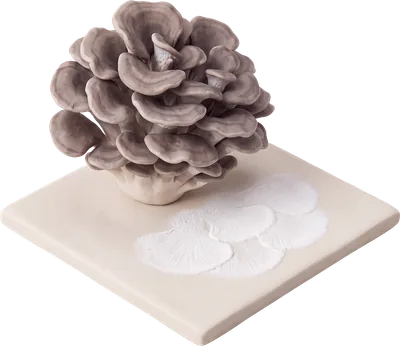
Maitake, also called hen of the woods, is Grifola frondosa (family Grifolaceae): a soft, gray-brown polypore whose wavy, overlapping fronds grow in one large rosette from a single branched base, in the wild usually at the foot of an oak. Cultivated strains run from gray-brown to nearly white. It isn't chicken of the woods, which is Laetiporus: bright yellow-orange shelves with no clear stem, in a different family. Growers call maitake hard: it runs long, many strains fruit poorly, and it wants closer watching than most. This page follows it on a farm's clock, from the culture to the second harvest, on blocks in bags. Burying blocks outdoors is a slower method it doesn't cover.
Maitake at a glance
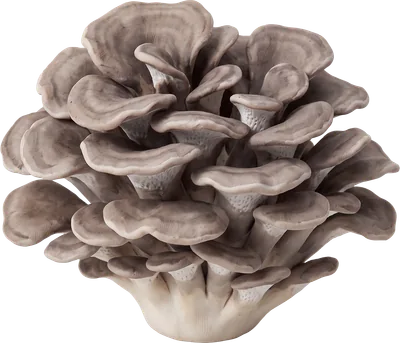
Fruiting
- Temperature
- 54 to 64 °F (12 to 18 °C)
- Humidity
- 75 to 85% relative humidity
- Fresh air
- CO2 under 1,000 ppm
- Light
- 8 hours a day
Incubation
- Temperature
- 68 to 75 °F (20 to 24 °C)
- Spawn rate
- 3 to 6% of the wet substrate's weight
Harvests
- Flushes worth picking
- 1 to 2
Practice
- Substrate
- prefers oak, will grow off masters mix
- Opening the bag
- cut corners of bag for primordal growth, after a few inches of growth to allow for more growth.
- Harvest when
- When the fronds have grown out, turned a darker in colour, still firm and healthy looking. Preferably before it drops it white spores.
- To start fruiting
- Primordial formation: Initiation temp: 10-16c (50-60f) RH: 95% Duration:5-10 days CO2: 2,000-5,000ppm FAE: 4-8 per hr
Fruiting temperature, humidity, fresh air, light, incubation temperature, flushes worth picking, substrate, opening the bag, harvest when and to start fruiting are the cultivation team's own. The rest come from the published sources listed under Sources.
How long maitake mushrooms take to grow
A maitake block gives its first harvest on about day 75 after it is inoculated and its second, on a block that gives one, on about day 105. Before that, the grain spawn takes about 20 days, and before the grain a new culture takes about 14 days, on agar or in liquid culture: about 109 days from a new culture to the first harvest. A farm with a culture on hand starts at the grain spawn, and one that buys its grain spawn starts at Day 0. Published guides disagree on how long each stage takes; these are the days MycoQR's cultivation team set.
about 34 days before
Agar or liquid culture
inoculated
then about 14 daysabout 20 days before
Grain spawn inoculated
from the culture
then about 20 daysDay 0
Block inoculated
with the colonized grain
then about 30 daysabout Day 30
Colonized
keep it sealed until the primordium forms
then about 45 daysabout Day 75
First harvest
then about 30 daysabout Day 105
Second harvest
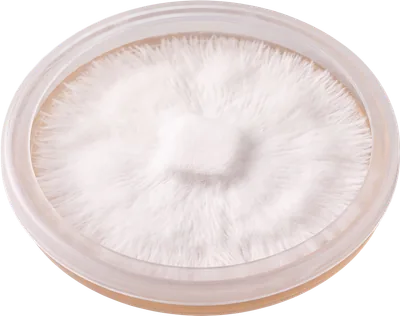
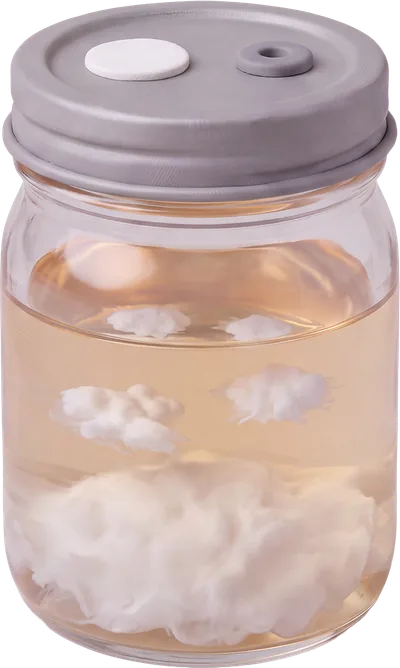
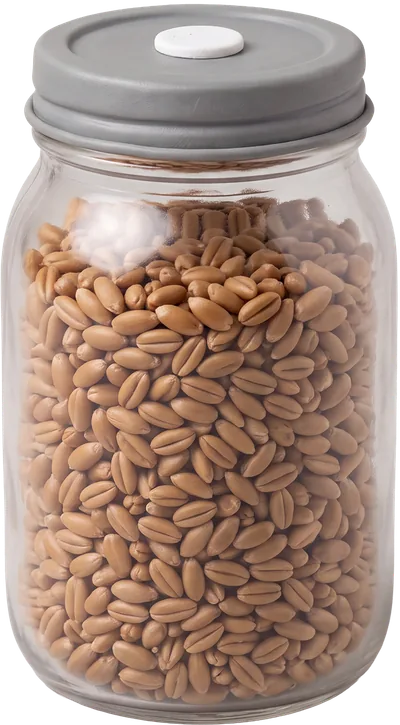
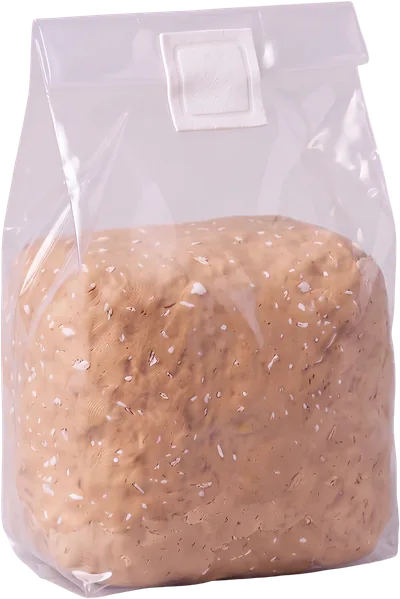
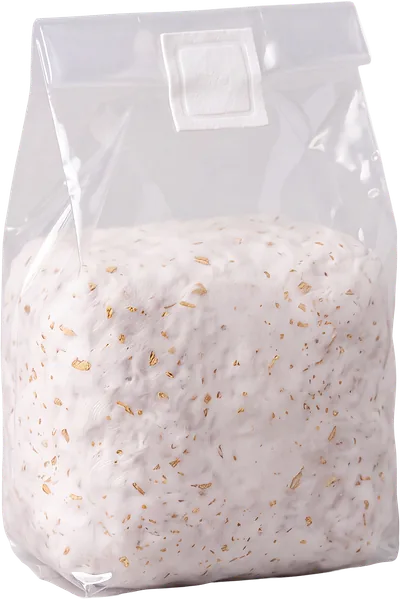
A colonized block can wait up to about 30 days at room temperature, or about 90 in cold storage, before you open it.
The strip starts from a culture. From a spore print, spores germinate on agar first and one strain is picked out before the culture step. Each spore start is new genetics, while a tissue culture keeps its parent's.
A farm's own blocks run faster or slower with its strain and its rooms. In MycoQR, a farm's maitake strain starts on the calendar's days, and the strain's own stage times and harvests take over once there are enough of them.
Every mushroom's days, side by side: which mushrooms to grow.
Maitake substrate and spawn
Substrate: prefers oak, will grow off masters mix.
Spawn rate: 3 to 6% of the wet substrate's weight.
Supplemented sawdust is sterilized, not pasteurized: a supplement such as bran feeds the mushroom but also raises the risk of contamination, and maitake is a weak competitor against molds. Maitake blocks run a little drier than most, at about 57 to 63% water. Japanese growers inoculate with a little sawdust spawn, about 20 to 25 ml a bag, not grain. Making and sterilizing blocks is in Mycology 103: substrate science and spawn production.
The strain matters more than for most mushrooms. Buy a strain sold for indoor blocks. Field & Forest sells a different strain for burying outdoors than for indoor blocks.
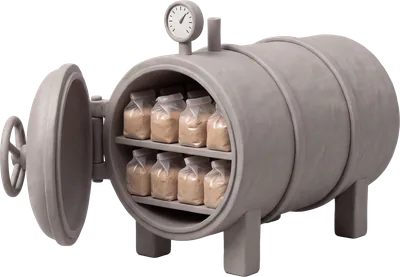
Colonizing
Keep blocks at 68 to 75 °F (20 to 24 °C) while they colonize.
On the calendar above, a block colonizes in about 30 days. A white block isn't a finished one: maitake goes on maturing after the mycelium has grown through, and published spawn runs for it go from under three weeks to ten. As it matures, the block grows a skin of mycelium on its surface, sometimes with orange-brown patches. In the Japanese schedule Chen et al. tabled in 1999, the block ran about 4 to 5 °F (2 to 3 °C) warmer than the air at this stage, so set the room for the block, not the thermometer on the wall.
Before any fronds, maitake makes a primordium: a dark gray, brain-like lump on the block's surface inside the sealed bag, often beaded with yellowish droplets. Leave the droplets alone.
A colonized block can wait up to about 30 days at room temperature, or about 90 days in cold storage. GroCycle, Chen's Japanese table and Japan's agriculture ministry all form the primordium in the sealed bag at room temperature, about 68 to 73 °F (20 to 23 °C), and GroCycle allows "a window of around a week" to open the bag once it has formed (GroCycle). A warm hold is not a pause: check held blocks for a dark primordium in the bag.
Fruiting maitake mushrooms: growing conditions
Opening the grow bag: cut corners of bag for primordal growth, after a few inches of growth to allow for more growth.
To start fruiting, Primordial formation: Initiation temp: 10-16c (50-60f) RH: 95% Duration:5-10 days CO2: 2,000-5,000ppm FAE: 4-8 per hr.
GroCycle leaves the first dark bumps sealed another 3 to 5 weeks and opens as the gray knobs begin to branch; Japan's agriculture ministry opens once the primordium nearly touches the bag's filter.
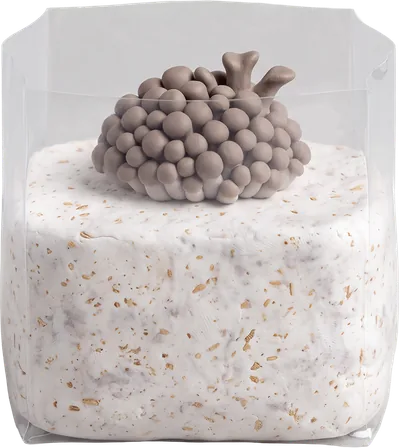
The primordium
- The primordium: gray knobs on top of the block.
- The first fingers branching out: time to open the bag.
| Fruiting | Maitake |
|---|---|
| Temperature | 54 to 64 °F (12 to 18 °C) |
| Humidity | 75 to 85% relative humidity |
| Fresh air | CO2 under 1,000 ppm |
| Light | 8 hours a day |
While the primordium forms in the sealed bag, the air inside runs far higher in CO2 on purpose: North Spore and GroCycle both give 2,000 to 5,000 ppm for that stage, at about 95% humidity. Once the bag is open, the fresh air on the card applies. GroCycle notes that some growers find maitake does best with 500 to 1,000 lux, more than most mushrooms.
A cooler room. Maitake fruits cooler than it colonizes, and sources differ on when the cool comes. The North American schedule cools the sealed bags to 50 to 60 °F (10 to 16 °C) to start the primordium, while Japanese bag growers let the primordium form near 72 °F (22 °C) and then move the block to about 63 °F (17 °C) (Chen et al. 1999, MAFF). No source tested a drop against no drop.
Each condition is explained in Mycology 104: environmental control and fruiting, and fruiting chamber designs shows ways to hold them.
When to harvest maitake
Harvest when When the fronds have grown out, turned a darker in colour, still firm and healthy looking. Preferably before it drops it white spores..
Japan's agriculture ministry times it by the underside: harvest when the pores have formed to about ⅛ in (2 to 3 mm) from the edge. Turn a frond over to check. The cluster is large but fragile: hold it by the base and cut the thick base with a small, sharp knife, or twist and pull it off, as GroCycle does.
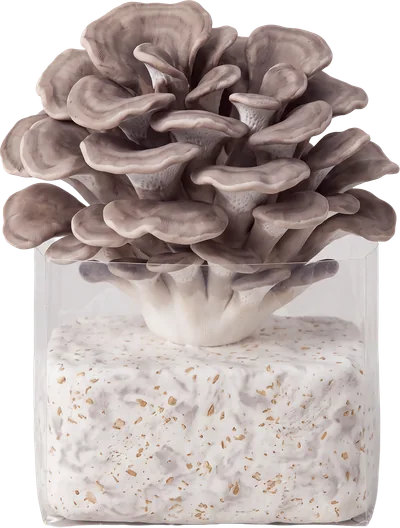
Ready to harvest
- Fronds open, their edges still curled under.
- Take the whole cluster at its thick base.
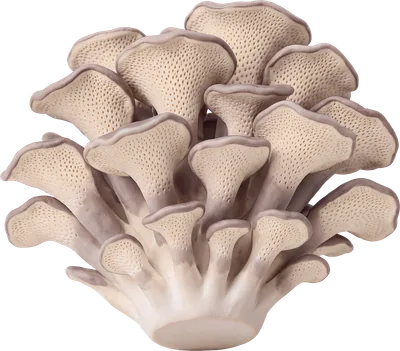
After the harvest
On the calendar above, the next flush is ready about 30 days after a harvest. A block gives 1 to 2 flushes worth picking. Sources differ on the second: Japan's agriculture ministry and the studies harvest each bag once, while Trimleaf counts a second flush, typically 30 to 50% lighter than the first (MAFF, Trimleaf). A second flush holds the block's shelf for those days, so weigh it against a new block.
Yield. Yield here is biological efficiency: fresh weight as a share of the dry substrate. In studies on oak or beech sawdust, good strains reached about 35 to 45%: Shen and Royse's best blends and best strains, and a Japanese grower's patented strain beside two comparison strains, from one harvest a bag. A hardwood and bran control in a 2018 study gave about 32% on its first flush. Many strains give less.
A fresh harvest keeps about 5 days, refrigerated and wrapped in paper, with its surface dry. Published figures run up to two weeks at 35 °F (1 to 2 °C) wrapped in rice paper.
In MycoQR, a new yield tray (the harvests you combine to sell) suggests a best-by date about 5 days out, and the Fresh Sheet marks a tray that is past it: mushroom farm inventory and invoicing.
Storing cultures and spawn
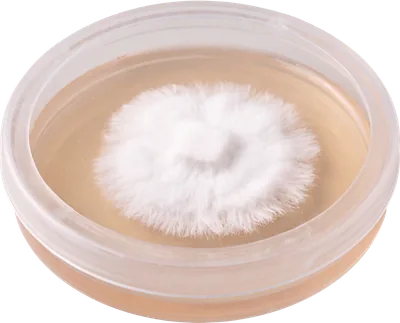
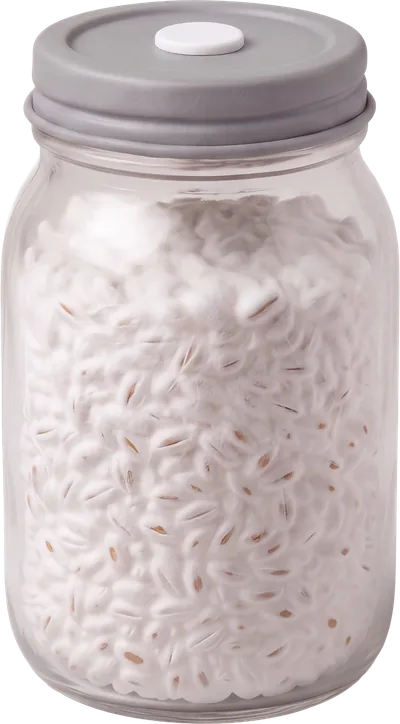
On the cultivation team's answers, cold storage extends the life of maitake plates, liquid culture, grain spawn, colonized blocks and spores. The days below are the team's. Storing cultures is in Mycology 102: sterile technique and culture work.
| Finished | Room temperature | Cold storage |
|---|---|---|
| Agar plates | about 30 days | about 90 days |
| Liquid culture | about 60 days | about 120 days |
| Grain spawn | about 30 days | about 60 days |
| Colonized blocks | about 30 days | about 90 days |
What goes wrong
No fruit, or poor fruit, from the strain. Many maitake strains fruit poorly or not at all, wild and collection strains alike. Buy spawn of a strain sold for indoor blocks, and test a new strain before you grow it at scale.
A primordium that aborts or grows badly. The bag was opened at the wrong time. Opened too soon, it can abort, stall or form badly; left too long, the fronds don't develop correctly.
Small, thin caps. Too much CO2 once the bag is open: above about 1,500 ppm, caps come small and thin. Give the room more fresh air.
Dry, shriveled primordia. The air is too dry.
A sour smell. Bacteria, from water sitting on the fruit or from condensation when the room's temperature swings; swings can also stunt growth or stop pins. Mist the air, not the mushroom, keep the temperature steady, and stop misting a day before harvest.
Green mold on the block. Maitake is a weak competitor, and a rich mix feeds the molds too: keep the bran modest. The contamination guide shows the molds.
A soft, fishy-smelling cluster. A ripe cluster left too long can soften and give off a foul, fishy smell. Pick on time.
Chen et al. and GroCycle both advise fruiting maitake in a room of its own. Low yields are normal for maitake. For a block that won't fruit, see no pins forming in Common Fruiting Problems.
Questions
Is maitake the same as hen of the woods?
Yes. Both names mean Grifola frondosa.
Is hen of the woods the same as chicken of the woods?
No. Chicken of the woods is Laetiporus: bright yellow-orange shelves with no clear stem, in a different family. Maitake is a gray-brown rosette of fronds on one branched base.
Is maitake hard to grow indoors?
Maitake is not a begginer fungi. it can be complex and time consuming.How long does maitake take to grow?
It takes about 109 days from a new culture to the first harvest, or about 95 days from the grain spawn, on the days MycoQR's cultivation team set. Counted from the day the block is inoculated, the first harvest comes on about day 75.
Does maitake need a cold shock?
Sources differ. Trimleaf calls for a cold shock of 48 to 72 hours at 50 to 55 °F (10 to 13 °C) to start pins, while Japanese bag growers let the primordium form at room temperature and then move the block to a cooler room (Trimleaf, MAFF). Every source fruits it cooler than it colonizes.
How many flushes does a maitake block give?
1 to 2 flushes worth picking, the second about 30 days after the first, though Japanese bag growers harvest each bag once.
Sources
Read in November 2026. The days in the grow calendar and the storage table, and any card fact marked as the team's, are MycoQR's cultivation team's.
- Penn State, specialty mushrooms: Production technology
- Japan Ministry of Agriculture, Forestry and Fisheries, variety test guideline (Japanese): まいたけ審査基準
- UF/IFAS, the lookalike: Chicken of the woods (Laetiporus sulphureus species complex)
- Chen et al. 1999, maitake at a glance, Japan's and North America's schedules: The Mushroom Growers' Newsletter
- Shen and Royse 2001, bran and grain added to oak sawdust: Applied Microbiology and Biotechnology
- Shen and Royse 2002, maitake strains compared: Applied Microbiology and Biotechnology
- Shen et al. 2002, North American and Asian maitake split by DNA: Mycologia
- Kim et al. 2018, ways to form the primordium, in bottles (Korean): Journal of Mushrooms
- Song et al. 2018, farm residues as maitake substrates: AMB Express
- Yukiguni Maitake, plant patent: Maitake mushroom named 'YUKIGUNIMAI 14GO' (US PP35,254)
- MushroomExpert: Grifola frondosa
- North Spore, spawn: Organic hen of the woods (maitake) grain spawn
- North Spore, blog: Hen of the woods (maitake)
- Field & Forest, outdoor kit: Maitake DIY outdoor block kit
- Field & Forest, logs: Growing maitake on logs
- Mycelia: strain sheet M9820, Grifola frondosa
- Mycelia: strain sheet M9827, Grifola frondosa
- GroCycle: How to grow maitake mushrooms, a step-by-step guide
- Trimleaf: Maitake (hen of the woods) mushroom grow kit guide
Related guides
How to Grow Shiitake Mushrooms
How to grow shiitake mushrooms on sawdust blocks, day by day: the substrate, browning, whether to chill or soak, growing conditions and when to harvest.
How to Grow Reishi Mushrooms
How to grow reishi mushrooms day by day: the conk and the antler, the fresh air that decides which, the substrate, and when to harvest.
Common Fruiting Problems and How to Fix Them
Diagnose and fix the most common fruiting problems: no pins, aborting pins, long stems, fuzzy feet, overlay, cracked caps and bacterial blotch.