How to Grow Reishi Mushrooms
How to grow reishi mushrooms day by day: the conk and the antler, the fresh air that decides which, the substrate, and when to harvest.
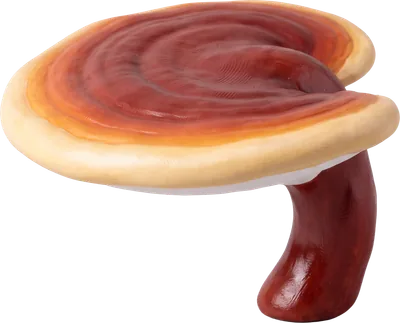
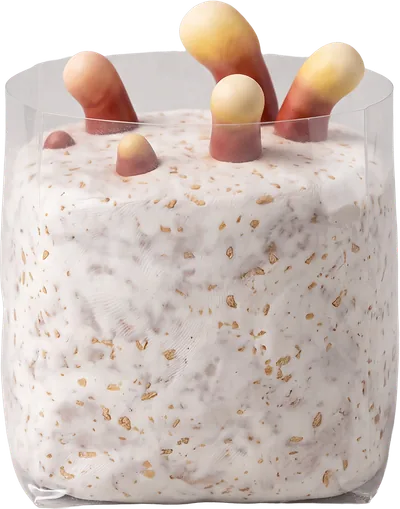
Reishi (Ganoderma sichuanense, widely sold as G. lingzhi or G. lucidum; family Polyporaceae) is a hard, woody shelf fungus of hardwoods: a shiny red-brown cap that lightens toward a pale growing rim, a white pored underside, and a stem. Hemlock reishi, G. tsugae, is a different species and isn't covered here. One block can grow reishi in two forms, finger-like antlers or a flat shelf, the conk, and the air decides which: fresh air for the conk, still air heavy with CO2 for antlers. This page follows the conk on a farm's clock, from the culture to the second harvest, on blocks in bags, and gives antlers a section of their own. Logs and buried blocks are slower, outdoor methods it doesn't cover.
Reishi conks at a glance
Fruiting
- Temperature
- 70 to 81 °F (21 to 27 °C)
- Humidity
- 80 to 95% relative humidity
- Fresh air
- CO2 under 2,000 ppm
- Light
- 12 hours a day
Incubation
- Temperature
- 68 to 79 °F (20 to 26 °C)
- Spawn rate
- 3 to 5% of the wet substrate's weight
Harvests
- Flushes worth picking
- 1 to 2
Practice
- Substrate
- Masters Mix
- Opening the bag
- Either open bag from top and encourge tall growth or side cut folded bag for shelf like growth
- Harvest when
- the white growing edge at the rim has shrunk to a thin line or gone and the cap is evenly red-brown, before brown spore dust appears
- To start fruiting
- 18-24c for 18/24 days
Fruiting temperature, humidity, fresh air, light, incubation temperature, flushes worth picking, substrate, opening the bag and to start fruiting are the cultivation team's own. The rest come from the published sources listed under Sources.
How long reishi mushrooms take to grow
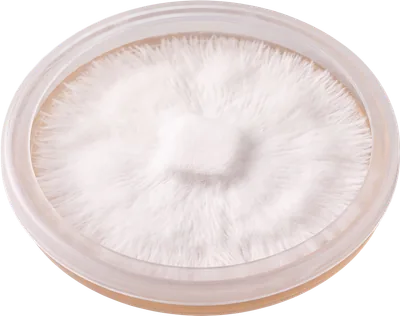
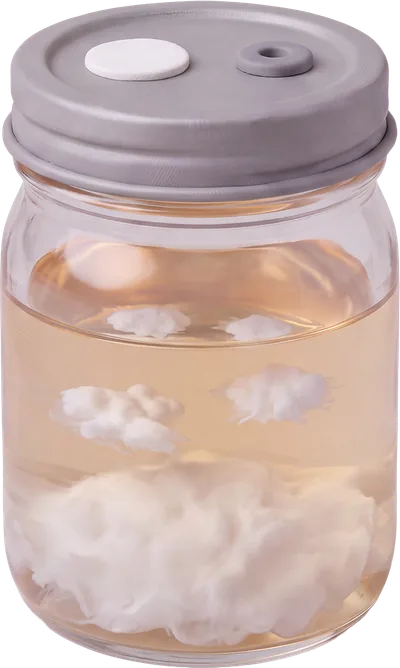
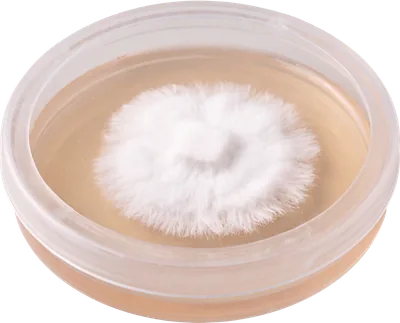
A reishi block gives its first harvest on about day 80 after it is inoculated and its second, on a block that gives one, on about day 200. Before that, the grain spawn takes about 20 days, and before the grain a new culture takes about 14 days, on agar or in liquid culture: about 114 days from a new culture to the first harvest. A farm with a culture on hand starts at the grain spawn, and one that buys its grain spawn starts at Day 0. Published guides disagree on how long each stage takes; these are the days MycoQR's cultivation team set.
about 34 days before
Agar or liquid culture
inoculated
then about 14 daysabout 20 days before
Grain spawn inoculated
from the culture
then about 20 daysDay 0
Block inoculated
with the colonized grain
then about 20 daysabout Day 20
Colonized
keep it closed until antlers form
then about 60 daysabout Day 80
First harvest
then about 120 daysabout Day 200
Second harvest
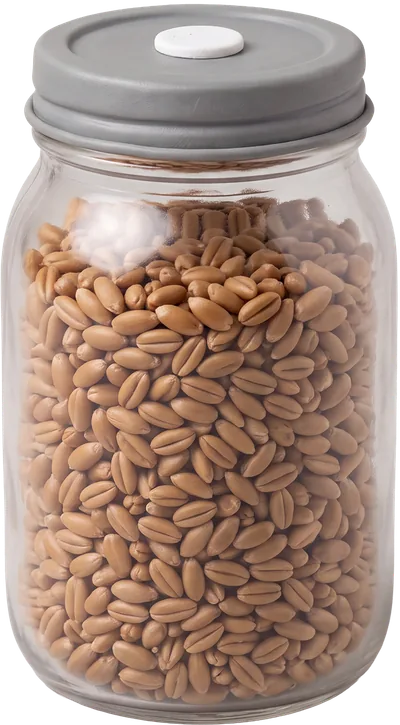
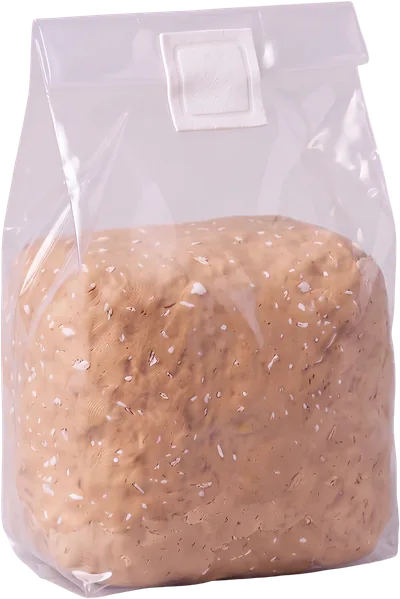
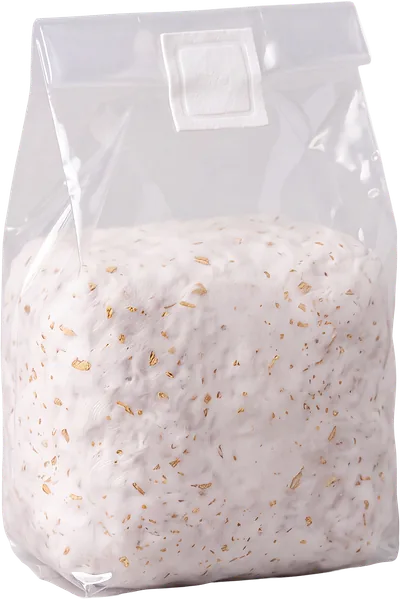
A colonized block can wait up to about 60 days at room temperature, or about 90 in cold storage, before you open it.
The strip starts from a culture. From a spore print, spores germinate on agar first and one strain is picked out before the culture step. Each spore start is new genetics, while a tissue culture keeps its parent's.
A farm's own blocks run faster or slower with its strain and its rooms. In MycoQR, a farm's reishi strain starts on the calendar's days, and the dashboard lists any block past its window. Once the strain has enough stage times of its own, those take over: mushroom grow stage tracking.
Every mushroom's days, side by side: which mushrooms to grow.
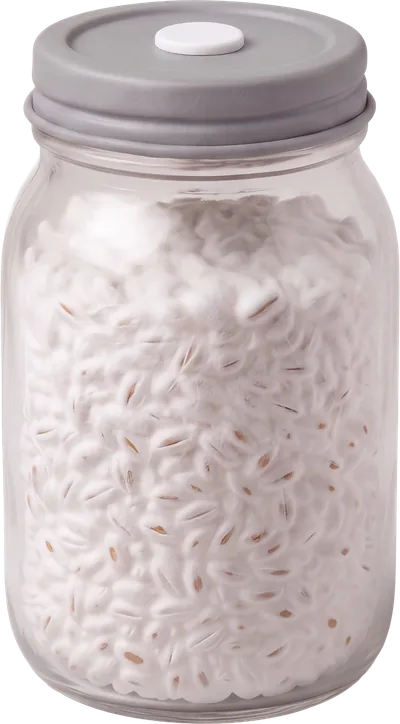
Reishi substrate and spawn
Substrate: Masters Mix.
Spawn rate: 3 to 5% of the wet substrate's weight.
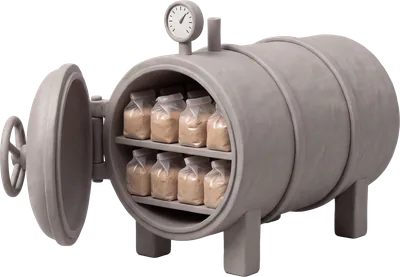
Sawdust with bran is sterilized, not pasteurized: the bran feeds the mushroom but also raises the risk of contamination, and Epic Gardening notes that the more bran, the higher the risk. Out-Grow and GroCycle both prefer oak. Making and sterilizing blocks is in Mycology 103: substrate science and spawn production.
Colonizing
Keep blocks at 68 to 79 °F (20 to 26 °C) while they colonize, in the dark.
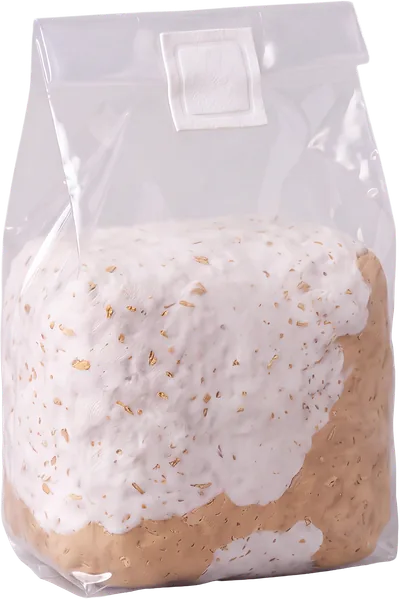
On the calendar above, a block colonizes in about 20 days. A colonized block can wait up to about 60 days at room temperature, or about 90 days in cold storage, before you open it, though at room temperature it may not wait: GroCycle notes antlers "often begin to grow inside the bag as soon as colonization is complete" (GroCycle).
Fruiting reishi conks: growing conditions
Opening the grow bag: Either open bag from top and encourge tall growth or side cut folded bag for shelf like growth
To start fruiting, 18-24c for 18/24 days.
| Fruiting | Reishi conks |
|---|---|
| Temperature | 70 to 81 °F (21 to 27 °C) |
| Humidity | 80 to 95% relative humidity |
| Fresh air | CO2 under 2,000 ppm |
| Light | 12 hours a day |
Fresh air makes the conk. NRCM's schedule and Out-Grow's stage table both pin at 1,500 ppm of CO2, then hold about 1,000 ppm while the cap forms. Out-Grow puts the point where antlers take over at about 2,000 ppm, the figure North Spore gives as its fruitbody limit, so 2,000 is the outer line, not the target. Field & Forest finds that more air flow and more light both help a conk form, and NRCM and Out-Grow pin with about 800 lux of light.
Humidity steps down. Sources split on humidity. NRCM and Out-Grow lower it as the conk hardens: 95% to pin, 80% as the cap forms, 60% to finish. Field & Forest keeps reishi at about 75% and warns that a room too wet can grow green mold on the conk (NRCM, Out-Grow, Field & Forest). The card gives one steady range; these sources step it down.
A cooler start, or none. Sources split on a temperature step to start pins: GroCycle finds cooler air, about 65 °F (18 °C), can help, while Out-Grow and NRCM pin warm, at 82 °F (28 °C) (GroCycle, Out-Grow, NRCM).
Each condition is explained in Mycology 104: environmental control and fruiting, and fruiting chamber designs shows ways to hold them.
Reishi antlers
Antlers are reishi grown in still air heavy with CO2: finger-like stalks reaching for fresh air, with no cap. North Spore's kit grows them by never opening the bag, because reishi "needs the high humidity and CO2 environment of a closed bag in order to form antlers" (North Spore, kit). They are a different target from the conk, with their own numbers, none of them on the card above:
- Air. Out-Grow puts the line at about 2,000 ppm of CO2: above it, antlers. North Spore's booklet runs antlers at 20,000 to 40,000 ppm, the air of a shut bag. A 2025 lab study grew kidney-shaped caps in normal air, about 400 ppm, and antlers at 3,000 ppm.
- Humidity. Near saturation in the closed bag: 95 to 100% in North Spore's booklet.
- Temperature. Sources grow antlers cooler than conks, and differ on how much: GroCycle at about 65 to 75 °F (18 to 24 °C), North Spore's kit sheet at 55 to 70 °F (13 to 21 °C) (GroCycle, North Spore, kit sheet).
- Light. Still needed: North Spore's kit sheet says reishi "will not grow without ambient light" (North Spore, kit sheet). The stalks grow toward it.
- Harvest. Any time: GroCycle picks antlers when they are a few inches tall, or lets them grow for months. Out-Grow finds antlers finish faster than conks, typically 20 to 30 days from pinning.
Antlers give less: GroCycle notes the antler form "doesn't give as high a yield as the conk form" (GroCycle). An antler can still become a conk, since in fresh air the antlers flatten into fan-like conks at their tips. Decide early, though: Out-Grow opens the bag at 2 to 3 in (5 to 8 cm) and warns that "switching late produces malformed mushrooms that are neither a clean antler nor a properly capped conk" (Out-Grow).
When to harvest reishi
Harvest when the white growing edge at the rim has shrunk to a thin line or gone and the cap is evenly red-brown, before brown spore dust appears.
Sources differ on the moment: North Spore notes that a conk picked with its white edge still on will probably store better, while NRCM waits until the cap is fully red-brown and spores have been shed on top (North Spore, spotlight, NRCM). Twist the conk off at its base and trim away any substrate. Leave no stub on the block: Out-Grow finds that stubs rot and invite contamination before a second flush.
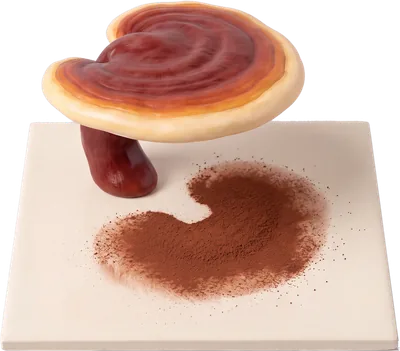
A conk past the card's cue drops a brown, rust-colored spore dust over everything near it. The tell is a cap that has lost its shine and a fingertip that comes away brown when you wipe it across the cap.
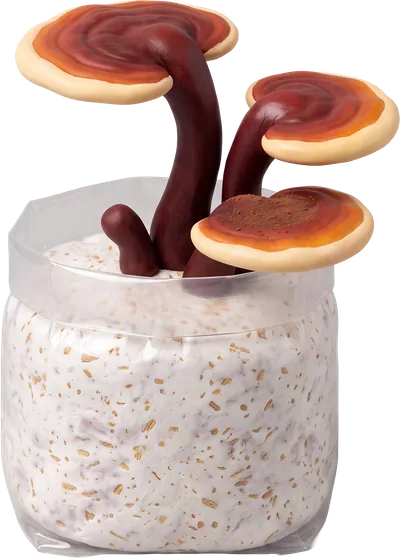
Conks
- The pale rim, the growing edge: still wide on this cap.
- Brown spore dust on the cap: past its pick.
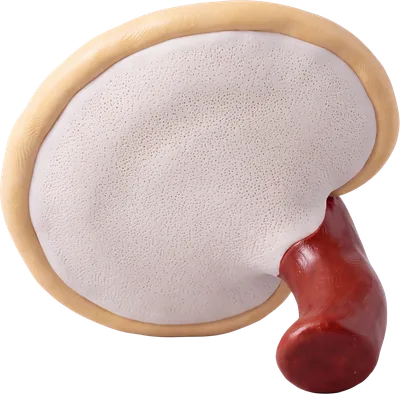
After the harvest
On the calendar above, the next flush is ready about 120 days after a harvest. A block gives 1 to 2 flushes worth picking, though a second flush is not a sure thing: North Spore says reishi "will only produce one flush" and Field & Forest that its blocks "fruit only once", while Out-Grow expects two to three from a block of sawdust and bran (North Spore, spawn, Field & Forest, Out-Grow).
Drying. Slice the conks soon after picking, while a knife still goes through: Out-Grow slices within two hours if it can, into strips about ¼ in (6 mm) thick, and Epic Gardening warns that a fully dried conk is "rock-hard and very difficult to slice" (Epic Gardening). NRCM and Out-Grow both dry low, about 95 to 115 °F (35 to 46 °C), and keep under 122 °F (50 °C), until a slice snaps cleanly. Store the dry slices sealed, with a desiccant. A dried harvest weighs a little under half of the fresh: NRCM gets 450 g dry from 1 kg fresh, so weigh a harvest fresh, at picking, if you compare one flush with the next.
A fresh harvest keeps about 14 days, refrigerated. Sources differ on fresh conks: Field & Forest stores them in the refrigerator "for up to 4 weeks", while Out-Grow says "fresh caps spoil within days" (Field & Forest, Out-Grow).
Storing cultures and spawn
On the cultivation team's answers, cold storage extends the life of reishi plates, liquid culture, grain spawn and colonized blocks, and does nothing for spores. The days below are the team's. Storing cultures is in Mycology 102: sterile technique and culture work.
| Finished | Room temperature | Cold storage |
|---|---|---|
| Agar plates | about 30 days | about 90 days |
| Liquid culture | about 60 days | about 120 days |
| Grain spawn | about 45 days | about 90 days |
| Colonized blocks | about 60 days | about 90 days |
What goes wrong
Antlers that stay antlers after the bag is open. Too much CO2. Out-Grow's fix is to cut the bag wide open across the top and move the block into fresh air, where the antlers lay down and form caps over the next two to three weeks.
Dry, cracked or woody edges. The air is too dry, a risk once the bag is opened. Trimleaf finds that below 80% the growing edges dry out and crack, which stops that cap for the flush; Field & Forest raises the humidity when conks shrivel or turn woody.
Green or cobweb mold on the conk. Too wet, or the air too still. Field & Forest warns that a room too wet, or one shared with other mushrooms, can grow green mold on reishi; Out-Grow sees cobweb mold where the humidity sits above 95% in stagnant air, and adds a small fan.
Mold after the bag is opened. Reishi grows slowly, and North Spore's booklet notes a greater risk of contamination once the block is opened. More bran in the mix raises the risk too.
Pins that stop. Out-Grow traces aborted pins to humidity below 80% while they form, a spike above 85 °F (29 °C), or a bag opened before the block finished colonizing.
Nothing grows. Too dark: reishi needs light to pin, and Out-Grow notes that a block left in a closet sits inert for weeks.
Scorched edges. Direct sun. Epic Gardening notes it scorches the white leading edge, and Out-Grow that it cooks the surface and stalls the grow.
Common Fruiting Problems shows each of these, and the contamination guide covers molds and bacteria.
Questions
How long does reishi take to grow?
It takes about 114 days from a new culture to the first harvest, or about 100 days from the grain spawn, on the days MycoQR's cultivation team set. Counted from the day the block is inoculated, the first harvest comes on about day 80.
Why does my reishi look like antlers?
Too much CO2 and too little fresh air. Antlers form in still air heavy with CO2, as in a closed bag; Out-Grow puts the line at about 2,000 ppm. Open the top of the bag and give the block fresh air and light, and the tips flatten into caps, though antlers switched late can come out misshapen. See reishi antlers.
Can reishi fruit inside the bag?
Yes. Antlers grow inside the closed bag, and a block that stays closed grows antlers only. For conks, the top of the bag comes off once the antlers have formed: see opening the grow bag, above.
How many flushes does a reishi block give?
1 to 2 flushes worth picking, the second about 120 days after the first on a block that gives one. Sources split: North Spore and Field & Forest get only one, while Out-Grow expects two to three.
Is reishi easy to grow?
Reishi is a Slow strain, patience is required. Intermediate fungi.Sources
Read in November 2026. The days in the grow calendar and the storage table, and any card fact marked as the team's, are MycoQR's cultivation team's.
- Oregon State University Extension: Reishi Mushroom Growing Guide (EM 9364)
- National Research Centre for Mushroom, ICAR: Cultivation of Reishi Mushroom
- Fang et al. 2025, reishi grown in raised CO2: Journal of Fungi
- North Spore, kit: Organic reishi mushroom grow kit
- North Spore, kit sheet: Reishi fruiting block instructions
- North Spore, booklet: fruiting block instructions
- North Spore, spawn: Organic red reishi grain spawn
- North Spore, spotlight: Species spotlight: reishi
- Field & Forest, blocks: How to grow reishi on ready-to-fruit blocks
- GroCycle: Grow reishi mushrooms on logs
- Out-Grow: How to grow reishi mushrooms
- Trimleaf: Red reishi vs antler reishi mushroom grow kits
- Epic Gardening: How to plant, grow, and care for reishi mushrooms
Related guides
How to Grow Turkey Tail Mushrooms
How to grow turkey tail mushrooms (Trametes versicolor) on sawdust blocks, day by day: substrate, cutting the bag, conditions, harvest and drying.
How to Grow Cordyceps militaris in Jars
Cordyceps militaris cultivation in jars, day by day: liquid culture, rice and broth, dark then light, when to harvest, and keeping a culture line fruiting.
Common Fruiting Problems and How to Fix Them
Diagnose and fix the most common fruiting problems: no pins, aborting pins, long stems, fuzzy feet, overlay, cracked caps and bacterial blotch.