How to Grow Nameko Mushrooms
How to grow nameko mushrooms (Pholiota microspora, sold as P. nameko) day by day: the substrate, a cool, humid fruiting room, whether to chill, and harvest.
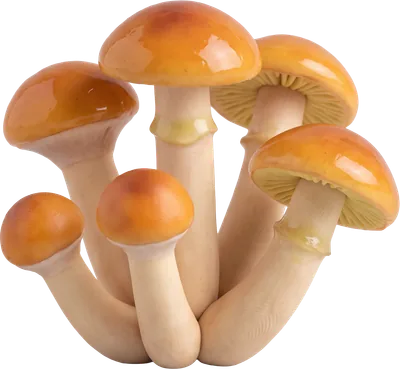
Nameko is Pholiota microspora (family Strophariaceae), also listed as P. nameko: small orange-brown caps on pale stems, packed in dense clusters on hardwood. It isn't the chestnut mushroom, Pholiota adiposa, its cousin in the same genus, which has a page of its own. Nameko fruits in a cool, very humid room, and North Spore rates it for advanced growers. This page follows it on a farm's clock, from the culture to the second harvest, on blocks in bags. Logs and blocks buried outdoors are methods it doesn't cover.
Nameko at a glance
Fruiting
- Temperature
- 54 to 64 °F (12 to 18 °C)
- Humidity
- 90 to 95% relative humidity
- Fresh air
- CO2 under 1,200 ppm
- Light
- 8 hours a day
Incubation
- Temperature
- 66 to 82 °F (19 to 28 °C)
- Spawn rate
- 2 to 5% of the wet substrate's weight
Harvests
- Flushes worth picking
- 1 to 2
Practice
- Substrate
- Grows well on masters mix
- Opening the bag
- Cut off the top of the bag, leaving a few inches of plastic standing above the block, then lightly scratch the top of the block.
- Harvest when
- the caps are still rounded and glossy and the veils under them are unbroken, before the caps open flat
- To start fruiting
- open the top of a fully colonized block, scratch its surface lightly, and move it to a cool, very humid room with fresh air
Fruiting temperature, humidity, fresh air, light, incubation temperature, flushes worth picking and substrate are the cultivation team's own. The rest come from the published sources listed under Sources.
How long nameko mushrooms take to grow
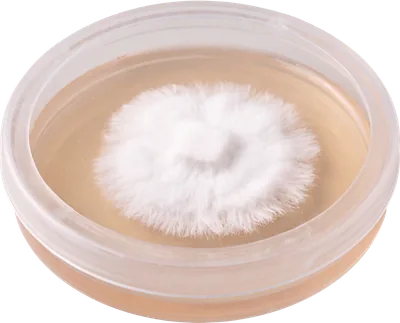
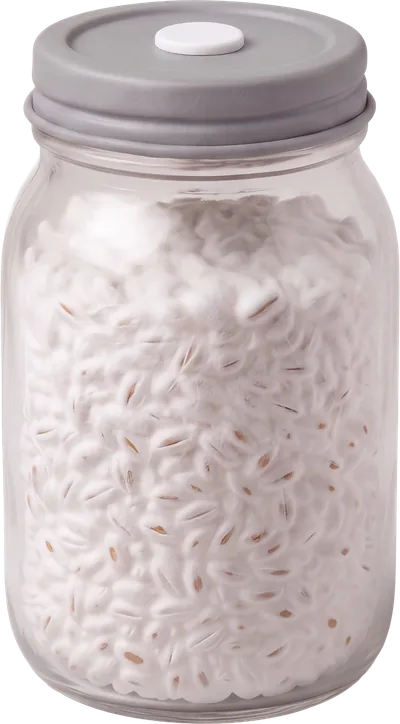
A nameko block gives its first harvest on about day 28 after it is inoculated and its second, on a block that gives one, on about day 49. Before that, the grain spawn takes about 22 days, and before the grain a new culture takes about 14 days, on agar or in liquid culture: about 64 days from a new culture to the first harvest. A farm with a culture on hand starts at the grain spawn, and one that buys its grain spawn starts at Day 0. Published guides disagree on how long each stage takes; these are the days MycoQR's cultivation team set.
about 36 days before
Agar or liquid culture
inoculated
then about 14 daysabout 22 days before
Grain spawn inoculated
from the culture
then about 22 daysDay 0
Block inoculated
with the colonized grain
then about 14 daysabout Day 14
Colonized
open the top, scratch it lightly
then about 14 daysabout Day 28
First harvest
then about 21 daysabout Day 49
Second harvest
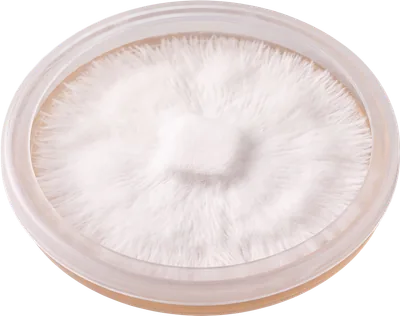
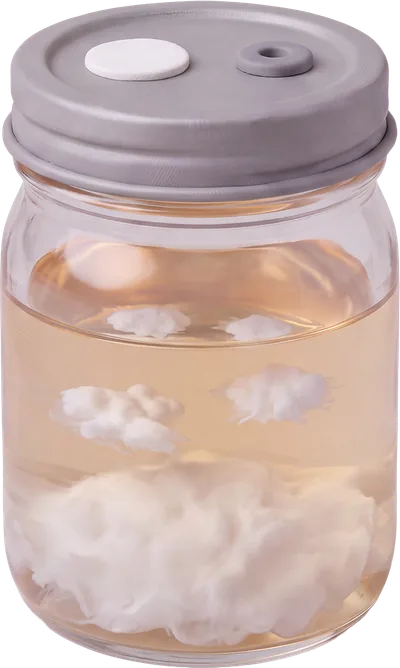
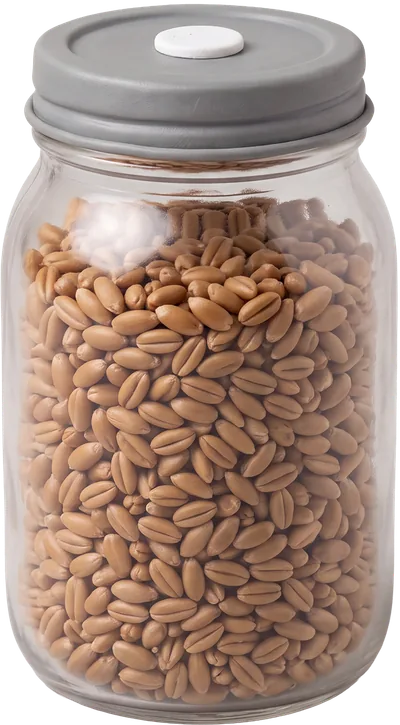
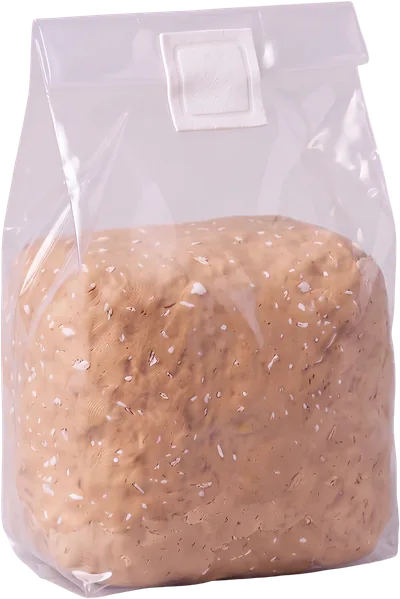
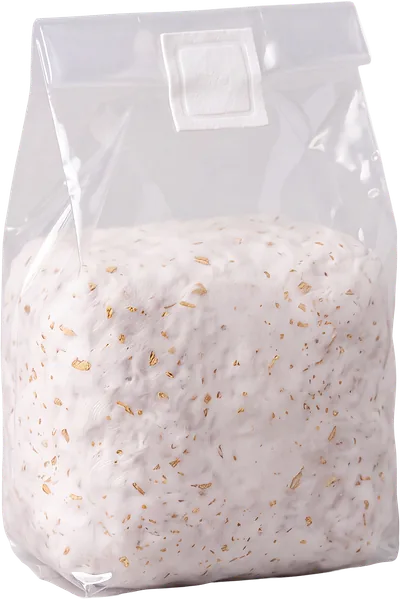
A colonized block can wait up to about 30 days at room temperature, or about 60 in cold storage, before you open it.
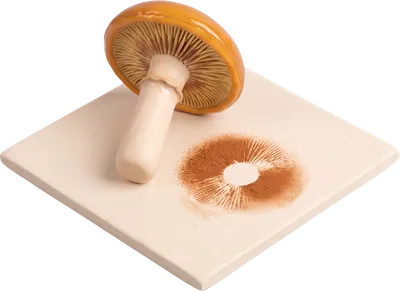
The strip starts from a culture. From a spore print, spores germinate on agar first and one strain is picked out before the culture step. Each spore start is new genetics, while a tissue culture keeps its parent's.
A farm's own blocks run faster or slower with its strain and its rooms. In MycoQR, a farm's nameko strain starts on the calendar's days, and once the strain has enough harvests of its own, its own days to first harvest take over, ripening and all.
Every mushroom's days, side by side: which mushrooms to grow.
Nameko substrate and spawn
Substrate: Grows well on masters mix.
Spawn rate: 2 to 5% of the wet substrate's weight.
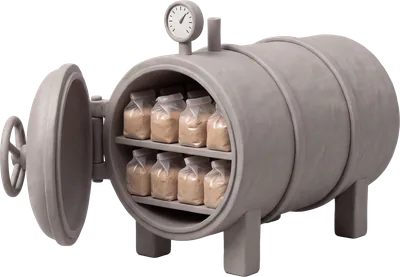
Supplemented sawdust is sterilized, not pasteurized: a supplement such as bran feeds the mushroom but also raises the risk of contamination. Nameko likes its mix wetter than most: Penn State notes it wants more moisture than enoki, and the Japanese and Korean research standard is about 65% water. Farms there grow it in bottles; this page follows bags. Making and sterilizing blocks is in Mycology 103: substrate science and spawn production.
Colonizing
Keep blocks at 66 to 82 °F (19 to 28 °C) while they colonize; the mycelium needs no light.
Keep the room from running warm: a trial at Japan's Nagano Prefecture forestry research center advised against 77 °F (25 °C) or more at any stage of incubation.
On the calendar above, a block colonizes in about 14 days and moves to fruiting the same day; a block left to ripen first harvests that much later. Nameko goes on ripening after the mycelium fills the block: in two Korean bottle studies, blocks left warm for longer after they filled pinned sooner once opened, and one study found heavier yields. A colonized block can wait up to about 30 days at room temperature, or about 60 days in cold storage, before you open it.
Fruiting nameko mushrooms: growing conditions
Opening the grow bag: Cut off the top of the bag, leaving a few inches of plastic standing above the block, then lightly scratch the top of the block.
To start fruiting, open the top of a fully colonized block, scratch its surface lightly, and move it to a cool, very humid room with fresh air.
North Spore leaves about 4 in (10 cm) of bag standing and warns that deep scratches make the mycelium break apart.
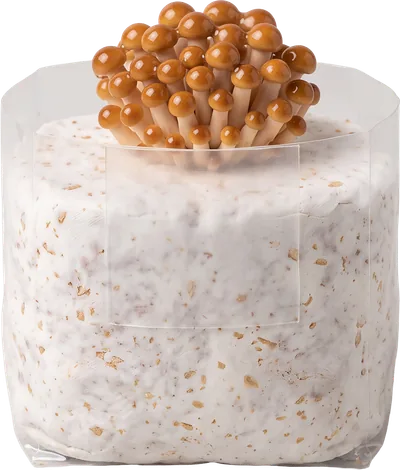
Pins on top
- The bag's top cut off, its walls left standing.
- Pins clustered on top of the block.
| Fruiting | Nameko |
|---|---|
| Temperature | 54 to 64 °F (12 to 18 °C) |
| Humidity | 90 to 95% relative humidity |
| Fresh air | CO2 under 1,200 ppm |
| Light | 8 hours a day |
Pins want the air wetter still: North Spore holds 98 to 100% humidity while they form, then 88 to 95%. Low light is enough: one study used 50 to 500 lux.
Temperature. In a Nagano trial, yield was highest at 63 °F (17 °C), but the stems stretched a little and the flesh ran soft there; 50 to 57 °F (10 to 14 °C) gave the better mushrooms, and 45 °F (7 °C) took twice as long to the first harvest. So the table's top is a quality line, not a yield ceiling. One sheet runs far warmer: Mycelia's M4190 sheet lists fruiting at 64 to 82 °F (18 to 28 °C), while North Spore keeps nameko below 65 °F (18 °C) and no other source here fruits it above 68 °F (20 °C) (Mycelia, North Spore). Ask the spawn maker for the temperatures of the strain you buy.
A cool room, and the chill. Nameko pins after a drop from a warm incubation room to a cool fruiting room. Sources split on a chill before that. Mushroom Mountain says nameko "needs a substantial cold shock to induce fruiting", while North Spore's blocks go straight to a room below 65 °F (18 °C). In a Nagano trial of five commercial cultivars, 10 days at 32 °F (0 °C) before fruiting showed no clear trend in yield: one cultivar gave larger mushrooms and a heavier first harvest, and every cultivar pinned in the same 8 days with or without the chill (Mushroom Mountain, North Spore, Nagano 2009). In that trial, the chill was optional.
Each condition is explained in Mycology 104: environmental control and fruiting, and fruiting chamber designs shows ways to hold them.
When to harvest nameko mushrooms
Harvest when the caps are still rounded and glossy and the veils under them are unbroken, before the caps open flat.
Once pins show, check daily: North Spore's kit sheet has them ready 5 to 10 days after they form. A cap that is dull and dry where it should be glossy means the air has been too dry: Out-Grow ties it to humidity below 88 to 90%, or direct airflow on the fruit. Cut the cluster at its base: Penn State cuts the stems near the base with scissors, and the Nagano trials cut with about ¾ in (2 cm) of stem.
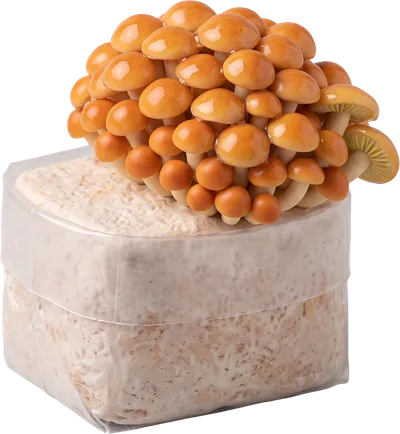
Ready to harvest
- Caps rounded and glossy, veils unbroken.
- A cap opening at the edge: pick before the rest follow.
- Cut the cluster at its base.
After the harvest
On the calendar above, the next flush, on a block that gives one, is ready about 21 days after a harvest. A block gives 1 to 2 flushes worth picking. Sources differ on the second: North Spore calls nameko "a reliable first harvest producer but second harvests are difficult though not impossible", and Korean bottle growers now harvest once, while Mycelia and Out-Grow count 2 to 3 (North Spore, Jung et al. 2007, Mycelia, Out-Grow); where studies picked one, it was much smaller than the first. Before it, the Nagano trials cut the leftover stems back to the surface, and North Spore rests the block a week from misting, then soaks it in cold water for 20 minutes.
A fresh harvest keeps about 5 days, refrigerated as soon as it's picked, loose in a paper bag or a container that breathes.
In MycoQR, a new yield tray (the harvests you combine to sell) suggests a best-by date about 5 days out, and the Fresh Sheet marks a tray that is past it: mushroom farm inventory and invoicing.
Storing cultures and spawn
On the cultivation team's answers, cold storage extends the life of nameko plates, liquid culture, grain spawn and colonized blocks, and does nothing for spores. The days below are the team's. Storing cultures is in Mycology 102: sterile technique and culture work.
| Finished | Room temperature | Cold storage |
|---|---|---|
| Agar plates | about 30 days | about 90 days |
| Liquid culture | about 60 days | about 120 days |
| Grain spawn | about 30 days | about 60 days |
| Colonized blocks | about 30 days | about 60 days |
What goes wrong
Pins that turn brown and die. The surface dried out. North Spore warns that pins are at risk of aborting unless the surface stays moist: keep the humidity at its highest while they form.
No pins. The room is too warm, or too dry while pins should form. Nameko needs the drop to a cool fruiting room; for a block that still won't fruit, see no pins forming in Common Fruiting Problems.
Soft flesh and stretched stems. Too warm: the Nagano trial saw it at 63 °F (17 °C).
Long, stringy stems and small caps. Too much CO2: give the room more fresh air.
Green mold. Out-Grow notes that contamination on nameko most often shows as green, powdery patches; in a Korean trial, blocks that took weeks to pin carried more risk. The contamination guide shows the molds.
Questions
Is nameko the same as the chestnut mushroom?
No. Both are Pholiota and grow in clusters on wood, but the chestnut mushroom is Pholiota adiposa, with golden-brown, scaly caps. See how to grow chestnut mushrooms.
Is Pholiota nameko the same as Pholiota microspora?
Yes. They are two names for one species: some studies use P. microspora, and spawn sellers sell it as P. nameko.
Does nameko need a cold shock?
Sources differ: Mushroom Mountain says it needs one, while North Spore moves a block straight to a cool room (Mushroom Mountain, North Spore). In one trial of five cultivars, a chill changed nothing about when they pinned (Nagano 2009). Every source but one strain sheet fruits it cooler than it colonizes.
How long do nameko mushrooms take to grow?
It takes about 64 days from a new culture to the first harvest, or about 50 days from the grain spawn, on the days MycoQR's cultivation team set. Counted from the day the block is inoculated, the first harvest comes on about day 28.
Is nameko easy to grow?
Not a good first grow: it needs a cool, very humid room to pin, and young pins can die if the surface dries. Oysters are easier.Sources
Read in November 2026. The days in the grow calendar and the storage table, and any card fact marked as the team's, are MycoQR's cultivation team's.
- Penn State, specialty mushrooms: Production technology
- Nagano Prefecture Forestry Research Center 1992, year-round nameko growing (Japanese): Bulletin of the Nagano Prefecture Forestry Research Center No. 6
- Nagano Prefecture Forestry Research Center 2009, nameko cultivars and a chill before fruiting (Japanese): trials of 2004 to 2008
- Kim et al. 2006, nameko on sawdust in bottles and bags (Korean): Journal of Mushroom Science and Production
- Jung et al. 2007, nameko in plastic bottles and strain selection (Korean): Journal of Mushroom Science and Production
- Meng et al. 2019, nameko on corn stalk substrates: RSC Advances
- Daşdelen et al. 2022, farm wastes as nameko substrates: International Journal of Agriculture, Environment and Food Sciences
- North Spore, kit: Organic nameko mushroom grow kit fruiting block
- North Spore, kit sheet: Grow your own nameko
- North Spore, booklet: fruiting block instructions
- North Spore, spawn: Organic nameko mushroom grain spawn
- Out-Grow: How to grow nameko mushrooms (Pholiota nameko)
- Mushroom Mountain: Nameko (Pholiota nameko)
- Mycelia: strain sheet M4190, Pholiota nameko
Related guides
How to Grow Chestnut Mushrooms
How to grow chestnut mushrooms (Pholiota adiposa), not the UK's brown cremini: its days, substrate, growing conditions and when to harvest.
How to Grow Enoki Mushrooms
How to grow enoki mushrooms (Flammulina filiformis, long sold as F. velutipes) day by day: the substrate, the cold start, the sleeve and when to harvest.
Common Fruiting Problems and How to Fix Them
Diagnose and fix the most common fruiting problems: no pins, aborting pins, long stems, fuzzy feet, overlay, cracked caps and bacterial blotch.